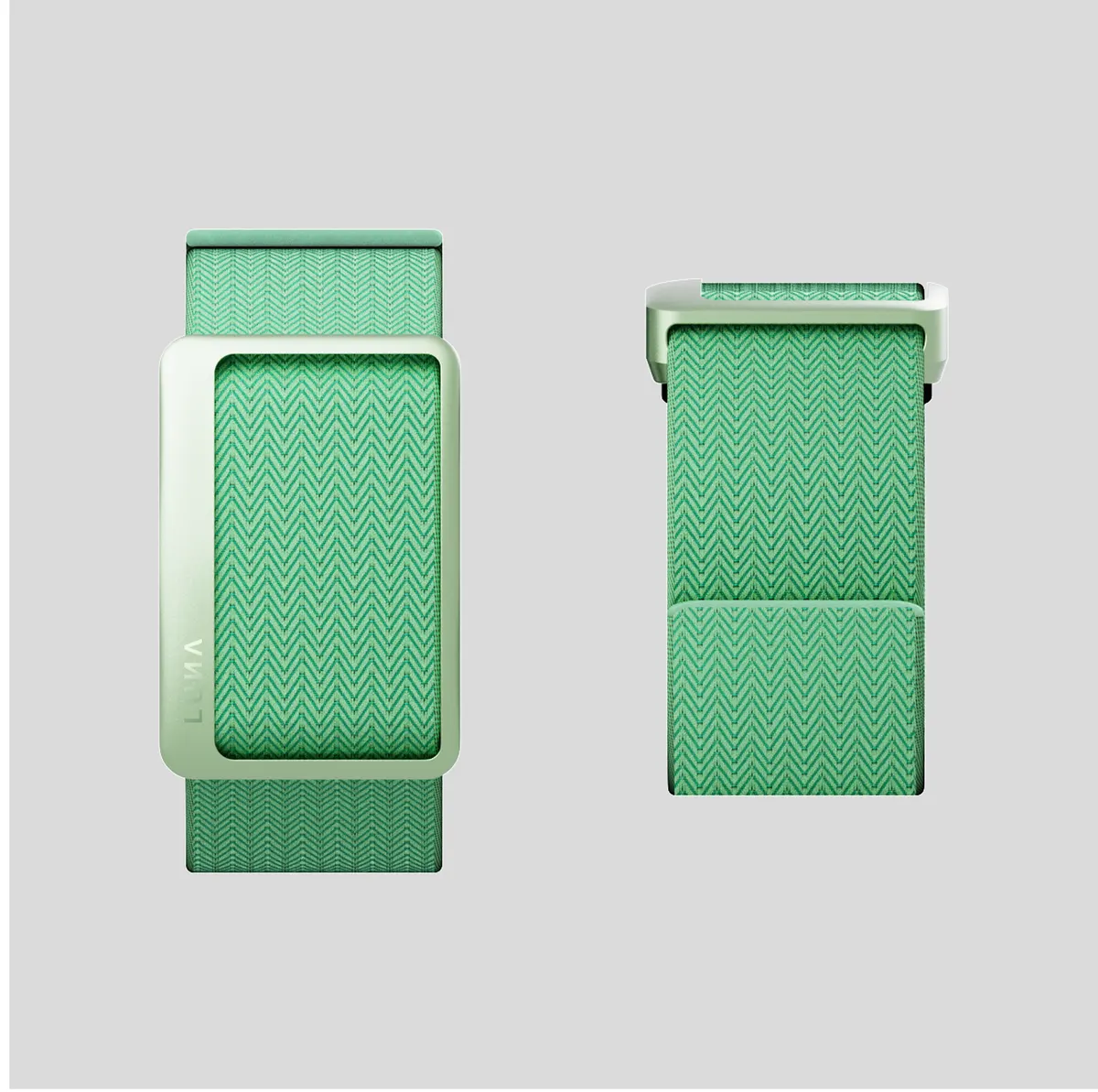
| Luna Band | Up to 10 days (typical, per Luna)About 60 minutes to charge from empty, magnetic charger. $149 once; regular price $149 (listing checked 2026-11-18); Luna states a $119 promotion from 19 to 30 November 2026 only (Band only, worldwide, USD); confirm at checkout. |
|---|---|
| WHOOP 5.0 | 14+ days (WHOOP claim)Wireless PowerPack gives 4+ days per charge. $199 a year with the One membership. |
| Google Fitbit Air | Up to 7 days (Google claim)$99.99; Premium optional from $9.99/month. |
Battery life is the spec where the claimed figures are easiest to compare, and they are still manufacturer claims. None was measured for this guide, and real life depends on workouts, sampling and temperature. All prices are US, USD, checked 2026-11-18.
What do the three manufacturers claim for battery?
- Luna Band: up to 10 days typical, about 60 minutes from empty on a magnetic charger.
- WHOOP 5.0: 14+ days (WHOOP claim). A Wireless PowerPack gives 4+ days per charge.
- Google Fitbit Air: up to 7 days (Google claim).
WHOOP leads on claimed days. Luna is three days ahead of Fitbit Air.
Is 10 days enough for most people?
For most readers, yes. Ten days means a charge roughly once a week to ten days, and the 60-minute charge from empty means a short top-up while you shower or work is realistic. That fits a weekly routine: pick a fixed day, and the band rarely runs flat.
WHOOP's 14+ days means fewer charges, and that is a real advantage if you dislike charging or travel for long stretches. It comes with a $199-a-year membership, which is $50 more than Luna's one-time price after 12 months. For many readers, the gap between 10 and 14 days is unlikely to be what decides the purchase.
Why do claimed and real battery days differ?
A claim reflects a standard use pattern, and your pattern differs. Workouts, optical sampling, haptic alerts and cold weather can all change runtime. Luna says "up to 10 days (typical)", which signals a range, not a guarantee. Neither WHOOP's nor Google's figure was verified by a third party here.
Sensor sets differ too. Luna lists PPG heart rate, an accelerometer, a gyroscope and skin temperature. Fitbit Air lists a wider set of 24/7 measurements, including SpO2 and breathing rate. The manufacturers' pages do not say how much each sensor contributes to battery drain.
A display is not a reliable predictor either. Google's Fitbit Edge, from $179.99, adds a glanceable display, GPS and an altimeter, and claims up to 7 days, the same as Fitbit Air.
What do charging style and price add to the claims?
Charging convenience can matter as much as total days. Luna's roughly 60-minute charge from empty is stated on its product page. WHOOP's Wireless PowerPack gives 4+ days per charge; how it is used day to day is not described on the pages reviewed.
Price changes the value of those days. Luna has a regular price of $149 (listing checked 2026-11-18); Luna states a $119 promotion from 19 to 30 November 2026 only (Band only, worldwide, USD); confirm at checkout, with no required subscription and free AI insights and coaching. WHOOP's band comes with a $199-a-year One membership, which is $398 over 24 months if renewed, and WHOOP does not state whether the band works without a membership. Fitbit Air is $99.99, which is $49 less than Luna at purchase, with Google Health Premium optional from $9.99 a month. See Luna Band vs WHOOP and Luna Band vs Google Fitbit Air for the cost breakdowns.
How many charges per month does each claim imply?
Simple arithmetic on the claims gives roughly 2 charges a month for WHOOP's 14+ days, 3 for Luna's up to 10 days and 4 for Fitbit Air's up to 7 days. Real use may need more. Luna asks for roughly one extra charge a month compared with WHOOP, and one fewer than Fitbit Air. Weigh that against price, features and whether a membership is required.
What else should you weigh besides battery days?
- Water: Luna lists 5 ATM; WHOOP lists IP68, up to 10 m for up to 2 hours.
- Fit: Luna has Medium (240 mm) and Large (295 mm) straps, worn on the wrist or upper arm, and the module weighs 24 g.
- Evidence: Luna publishes a validation comparison against a Polar reference, which is its own and not reproduced by a third party.
- Missing features: Luna has no built-in GPS, and SpO2 and VO2 Max are coming soon.
If you travel for weeks, hike or want to forget about charging, WHOOP's longer claim and PowerPack matter. If you wear a band mainly for daily trends and a weekly top-up fits your routine, Luna gives you the battery you need without the yearly fee.
What habits help battery on any band?
Claimed days assume typical use, so a few habits matter on every band. Charge on a fixed day so the band rarely runs flat, top up during a shower or a desk session, and expect heavier workout tracking and cold weather to shorten a charge. None of these tips is specific to one maker, and the manufacturers' pages reviewed do not quantify their effect.
Which battery claim suits which reader?
- Choose Luna Band if a 10-day claim is enough and you want no required subscription. Read the Luna Band review for the limits.
- Choose WHOOP if the fewest charging days matter most and a membership is acceptable.
- Choose Fitbit Air if the lowest purchase price matters more than battery.
For a wider shortlist, see the best screenless band guide. If 14+ days is non-negotiable, WHOOP is the better pick on its claims; for everyone else, Luna Band is the practical choice. Check the listing before buying, because figures and terms can change.
Sources
- Luna Band product page, LunazoneRead November 18, 2026
- WHOOP support: WHOOP basicsRead November 18, 2026
- WHOOP membership pageRead November 18, 2026
- WHOOP support: Membership pricingRead November 18, 2026
- Google Store: Google Fitbit AirRead November 18, 2026
- Google Store: watches and trackersRead November 18, 2026
- Google Store: Google Health PremiumRead November 18, 2026